
904 West Avenue # 109, Austin TX 78701
512-814-0148

PCOS Is Becoming PMOS: Here’s what you need to know

PCOS or PMOS? Why Mainstream Medicine Is Reframing the Conversation

If you've seen people online asking, "Wait... is PCOS being renamed?" — the answer is, for the most part, yes!

And to us, it's a change that's been a long time coming.

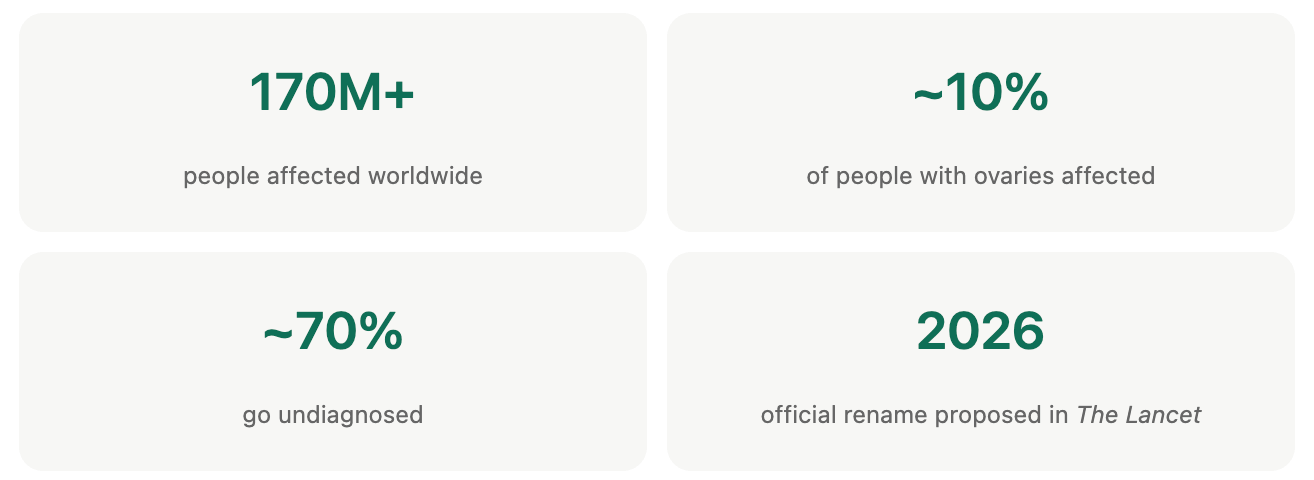
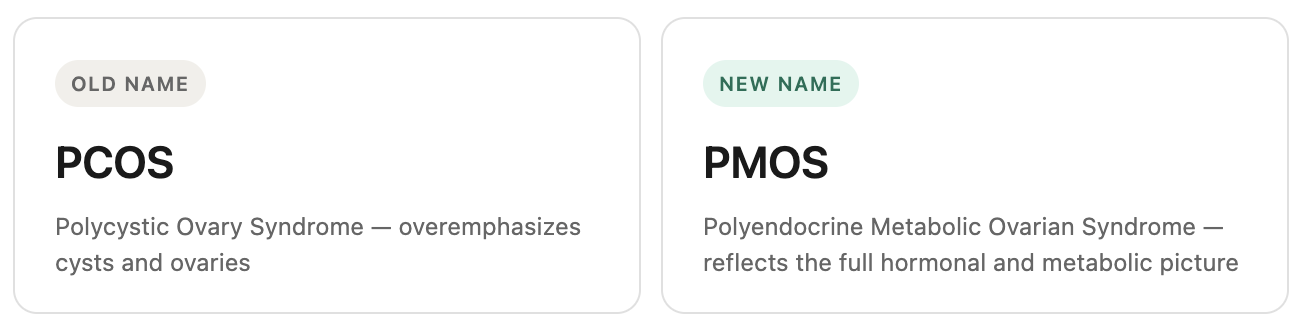
On May 12 2026, a global consensus published in The Lancet officially proposed renaming PCOS — Polycystic Ovary Syndrome — to PMOS: Polyendocrine Metabolic Ovarian Syndrome.[1]

Some headlines are making it sound like PCOS suddenly got renamed overnight. But... Look, here's the truth:

For many integrative and functional medicine practitioners, this idea is not new.

For years, functional and integrative medicine has viewed hormone symptoms through a wider lens—recognizing that blood sugar, inflammation, stress, nutrition, metabolism, and lifestyle patterns often influence hormone health long before symptoms show up on a lab report.

Why the name is changing

Understanding the Shift From PCOS to PMOS

The old name contributed to confusion and may have delayed diagnosis for many people. "Polycystic" implies ovarian cysts — but many people with PCOS don't actually have cysts at all.

And focusing on "ovary" suggested this is purely a reproductive issue, when in reality it involves the endocrine system, metabolic health, and more.[2]

The new name — PMOS — stands for Polyendocrine Metabolic Ovarian Syndrome. Each word is intentional:
One important note: this is a rollout, not an overnight switch. Most patients and clinicians will continue using "PCOS" during the transition. If you've already been diagnosed with PCOS, nothing about your diagnosis changes.[3]

Feel free to reach out to us directly if you feel you need more personalized support.


Common PMOS (formerly PCOS) symptoms

Whether your provider says PCOS or PMOS, the symptoms remain the same:

• Irregular or absent periods
• Unwanted facial or body hair
• Difficulty losing weight
• Fertility challenges

• Acne or oily skin
• Hair thinning on scalp
• Fatigue or energy crashes
• Blood sugar concerns

Everybody has a different body, however, so symptoms vary.


PMOS / PCOS Treatment Should Be Personalized and Multi-Faceted

Supporting blood sugar, inflammation, stress, sleep, and hormones together matters because the body doesn’t separate these systems.

When insulin levels run consistently high — as they often do in PCOS — that signal can ripple into the endocrine system.
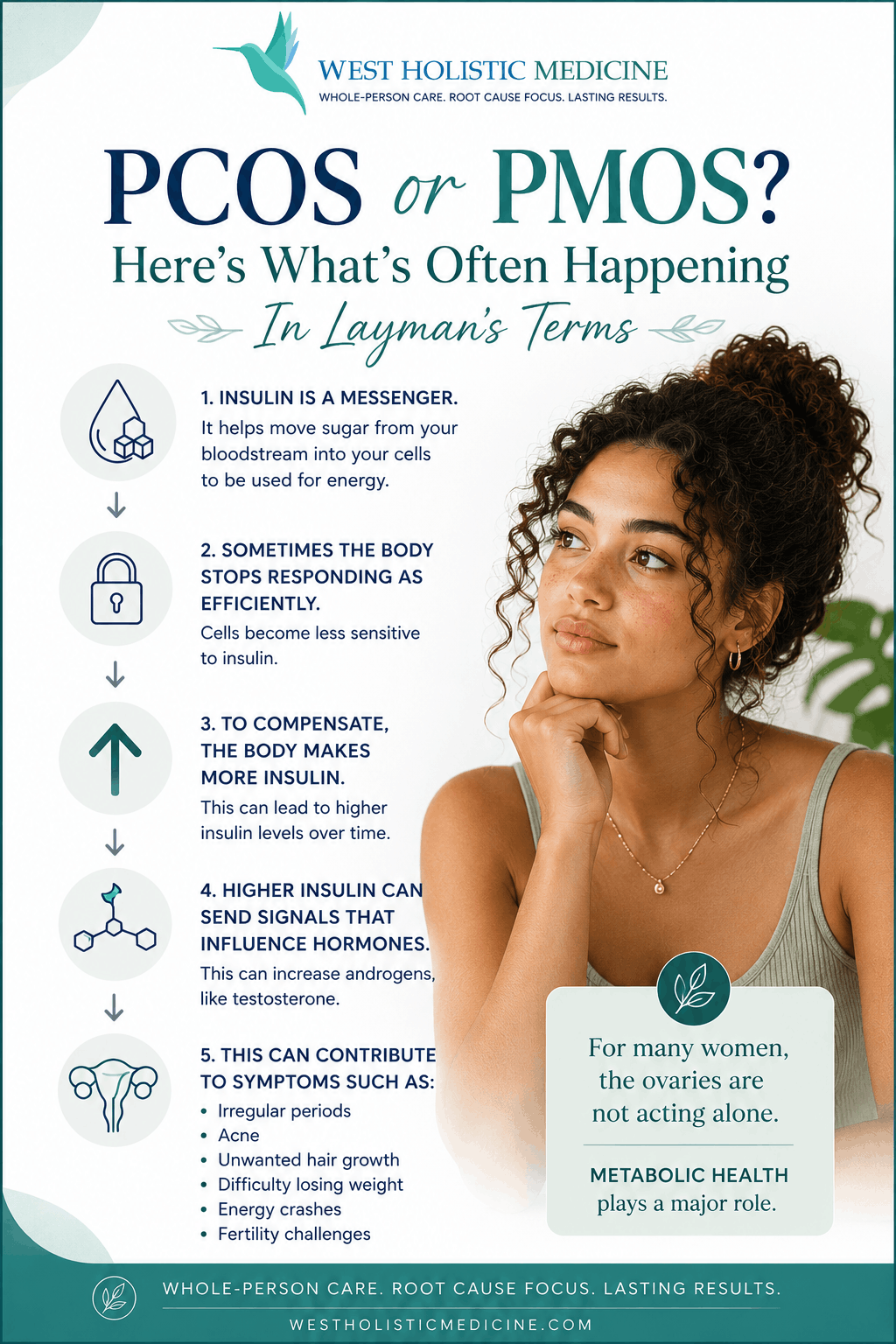
Vertical infographic from West Holistic Medicine explaining the connection between PCOS and PMOS in simple terms. A mixed-race woman is featured beside a step-by-step visual showing how insulin resistance may contribute to hormone changes. The infographic explains that insulin helps move sugar into cells, but when the body becomes less responsive, higher insulin levels can influence hormones and contribute to symptoms like irregular periods, acne, unwanted hair growth, difficulty losing weight, energy crashes, and fertility challenges. The visual emphasizes that metabolic health plays a major role and that the ovaries are not acting alone.

The ovaries may respond by producing more androgens (often called "male-pattern hormones"), which can contribute to symptoms like irregular cycles, acne, hair changes, and ovulation difficulties.[2]

Inflammation, gut health, cortisol, sleep quality, and nutrient status all feed into this picture too. Treating PMOS effectively means addressing the full ecosystem — not just one piece of it.


What you can do to support PMOS / PCOS

Build balanced meals

Pair protein + fiber + healthy fat at every meal to support blood sugar stability and reduce insulin spikes. Think: eggs + greens + avocado, salmon + roasted veg + quinoa, or apple + nut butter + turkey.

Strengthen your muscles

Muscle tissue is one of the primary sites for insulin sensitivity. Walking, Pilates, resistance bands, or weight training all count. You don't need to go hard — you need to go consistently.

Protect your sleep

Poor sleep directly worsens insulin resistance and drives cortisol dysregulation — both of which aggravate PMOS symptoms. Aim for 7–9 hours with consistent timing.

Support your stress response

Chronic stress elevates cortisol, which disrupts insulin signaling and hormone balance. EFT tapping, acupuncture, mindfulness, and restorative movement are all tools we work with at WHM.

Get the right lab work

Standard hormone panels often miss the full picture. Comprehensive testing — including fasting insulin, inflammatory markers, thyroid, and nutrient levels — helps identify root contributors, not just symptoms.

Think You Might Have PMOS?

Our team takes a whole-body, multi-disciplinary approach — looking at hormones, metabolism, inflammation, and lifestyle together. You deserve a provider who sees the full picture.

Sources:
1. Teede et al. (2026). The Lancet — Polyendocrine metabolic ovarian syndrome, the new name for PCOS. PubMed.
2. The Guardian (May 2026) — What is PCOS, and why is it being renamed PMOS?
3. Verywell Health (2026) — PCOS gets a new name: PMOS. What does it mean for diagnosis and treatment?

Leave a Comment

Your email address will not be published. Required fields are marked *

Share this article

Sign up to our newsletter