

If you've lived in Austin long enough, you know — the sun here isn't messing around.
We're talking 100+°F days, blinding parking lots, and that specific kind of burn you get at Barton Springs when you "forgot" to reapply.
At West Holistic Medicine, we're not here to tell you to hide indoors. We love the sun, the trails, the water days — all of it. But we do want you to enjoy it without burning, damaging your skin long-term, or missing signs that something needs attention.
Why Sun Protection Matters for Your Skin Health
Skin cancer is the most diagnosed cancer in the US.
The reassuring part? A huge chunk of cases are preventable — and when caught early, outcomes are really good.
Too much UV exposure can damage skin cells, speed up aging, cause pigmentation changes, and trigger inflammation — especially if you already deal with sensitive skin, hormonal shifts, or chronic inflammation.
Choosing a Safer Sunscreen
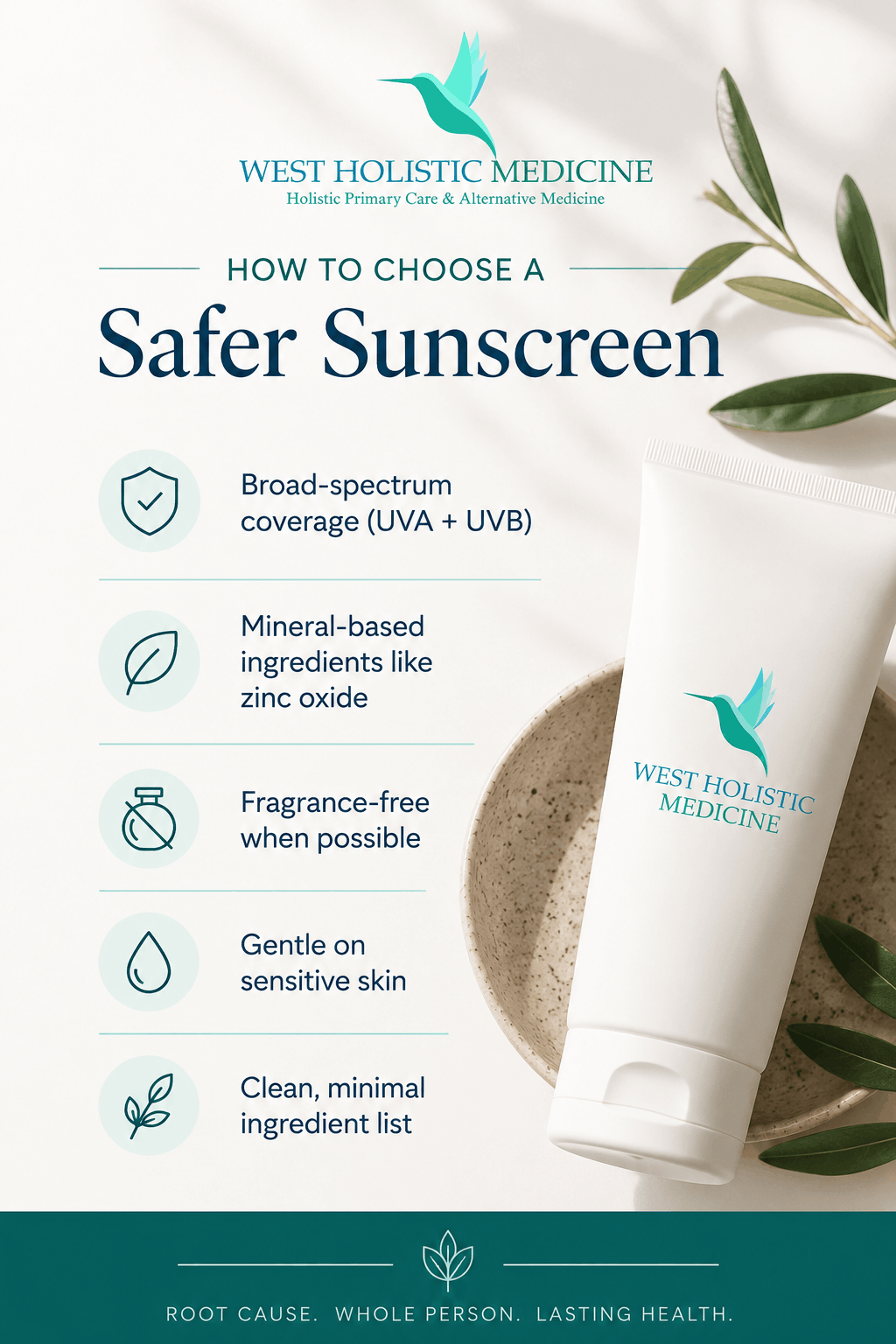
Not all sunscreens are created equal — and if you've ever read a label and felt confused, we absolutely get it.
Many conventional sunscreens contain synthetic chemicals that can absorb into the bloodstream, disrupt hormones, or irritate sensitive skin.
One sunscreen line we often recommend is:
BIODROGA
Their SPF 15 Day Cream is great for days you're moving inside and out — running errands, working near windows, quick outdoor time. It's lightweight and easy to layer.
Their SPF 50 Protection Cream is your Barton Springs, Greenbelt, rooftop-bar SPF. It offers higher protection for longer days in the Texas sun.
Just be sure to apply correctly!
● Apply 15–30 minutes before going outside
● Reapply every 2 hours — no exceptions
● Reapply after swimming or sweating
● Pair with a hat, sunglasses, and UV-protective clothing
Know the ABCDE Signs of Skin Cancer
One of the most powerful things you can do? Check your own skin regularly. You know your body better than anyone.
Watch for moles or spots that follow the ABCDE rule:
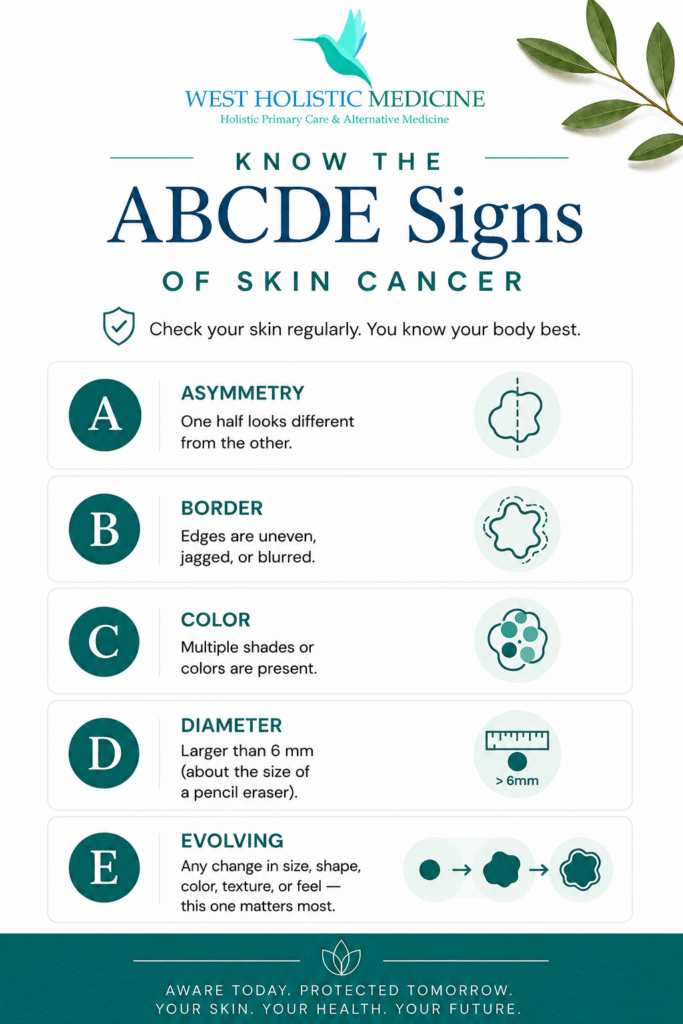
If something looks off or just feels different than it used to — get it checked. Early detection is everything!
Other warning signs to watch for:
● A sore or cut that won't heal
● Scaly or crusty patches that keep coming back
● Pearly or waxy-looking bumps
● New growths that bleed easily
● Spots that itch, hurt, or feel tender without explanation
● Changes in freckles you've had for years
Protecting Your Skin From the Inside Out
This is where we get a little nerdy — and where functional medicine really shines.
Sunscreen matters. But what you eat, how inflamed your body is, and what nutrients you're actually absorbing all affect how your skin handles sun exposure, how fast it heals, and whether you're prone to burning or sun sensitivity.
To learn more, check out our previous blog on foods and supplements that help prevent sunburn, where we discuss nutrients like lycopene, vitamin C, zinc, and other ways to build sun resilience from the inside out.
When to Dig Deeper
If you're doing all the right things — wearing SPF, eating well, staying hydrated — and still struggling with sun sensitivity, burning easily, or skin that's slow to heal, there may be something else going on.
Our providers look at things like:
● Inflammatory markers
● Micronutrient levels (are you actually absorbing what you eat?)
● Hormones — estrogen and cortisol can affect pigmentation and sensitivity
● Liver function and detox pathways
● Adrenal patterns and heat tolerance
We don't guess. We test, then personalize.
Share this article