
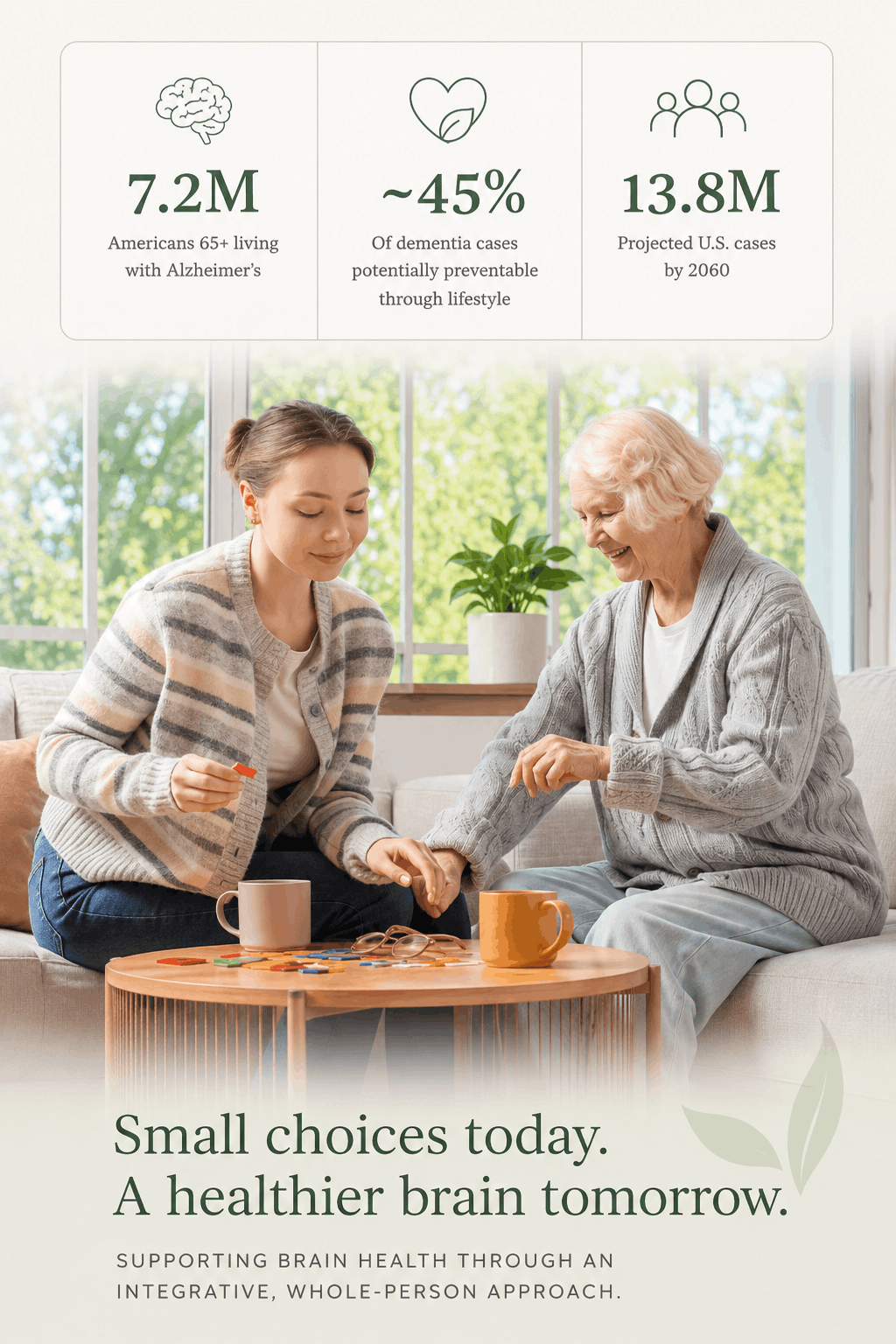
Alzheimer's is the most common form of dementia — and one of the most feared diagnoses in medicine. But here's what often gets lost in that fear: nearly half of all dementia cases may be preventable. That's not false hope. That's the 2024 Lancet Commission speaking.
It's Not All in Your Genes
Genetics matter, but they're far from the whole story. The landmark 2024 Lancet Commission on Dementia identified 14 modifiable risk factors that together account for up to 45% of dementia cases worldwide. Two were newly added in 2024:
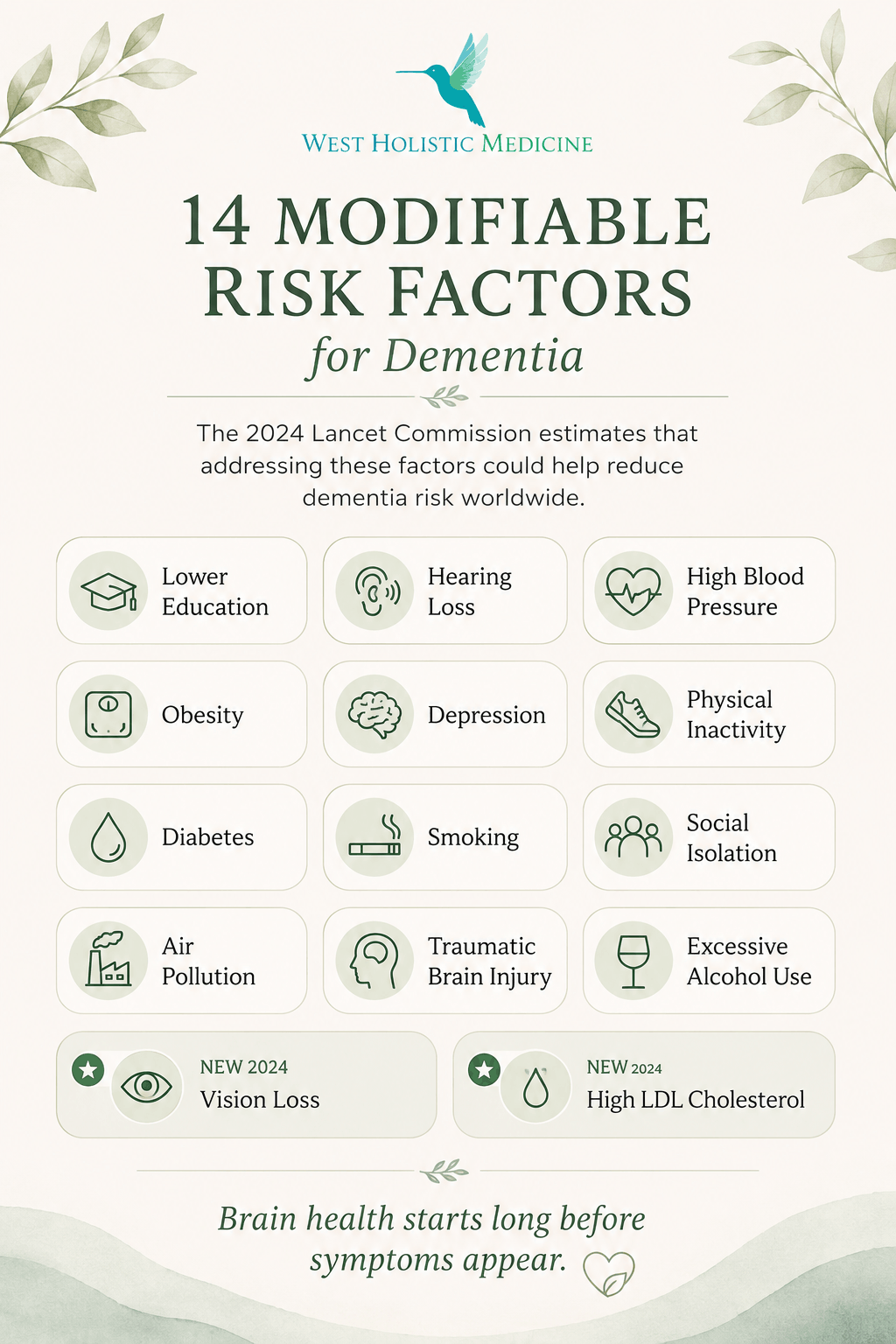
Most of these are addressable — particularly in midlife, before symptoms ever appear.
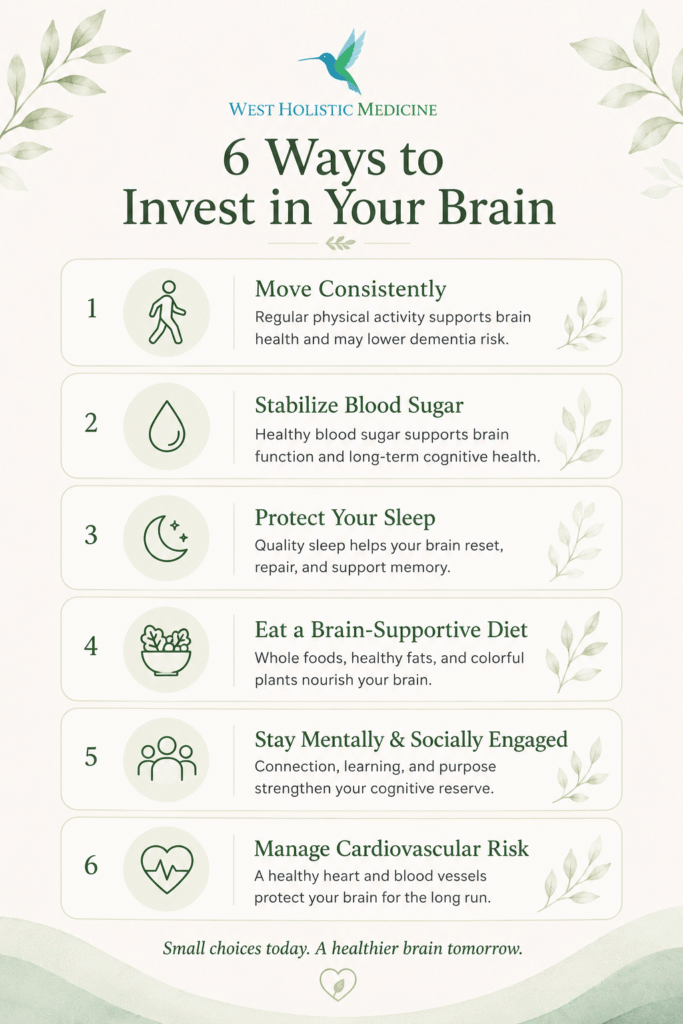
Supporting Brain Health Through an Integrative Lens
At West Holistic Medicine, we believe brain health is about more than memory alone.
Many of the factors linked to long-term cognitive health—including blood sugar balance, cardiovascular health, sleep quality, chronic inflammation, hormone balance, stress resilience, and nutrition—are areas we routinely evaluate.
Our physicians take the time to look beyond symptoms and understand the bigger picture of your health.
Depending on your unique needs, this may include:
✓ Comprehensive lab evaluation
✓ Metabolic and cardiovascular risk assessment
✓ Sleep and lifestyle optimization
✓ Stress and nervous system support
✓ Personalized prevention strategies
✓ Nutritional support
Whether you're looking to optimize your health today, have a family history of Alzheimer's disease, or simply want to support healthy aging, our team is here to help you create a personalized plan rooted in both evidence-based and holistic medicine.
The choices we make today may help shape the health of our brains tomorrow—and it's never too early or too late to start.
Sources:
1. Alzheimer's Association. 2025 Alzheimer's Disease Facts and Figures. Alzheimer's Dement. 2025. alz-journals.onlinelibrary.wiley.com
2. Livingston G, et al. Dementia prevention, intervention, and care: 2024 report of the Lancet standing Commission. The Lancet. 2024. thelancet.com
3. Alzheimer's Association. Alzheimer's Disease Facts and Figures 2026. alz.org
4. Hwang PH, Marino FR, Vasan RS, et al. Physical Activity Over the Adult Life Course and Risk of Dementia in the Framingham Heart Study. JAMA Network Open. 2025;8(11):e2544439. doi:10.1001/jamanetworkopen.2025.44439.
5. Morris MC, et al. MIND diet associated with reduced incidence of Alzheimer's disease. Alzheimer's & Dementia. 2015. Updated evidence reviewed in: Agarwal P, et al. Association of MIND diet with cognitive decline among Black and White older adults. Alzheimer's & Dementia. 2024. alz-journals.onlinelibrary.wiley.com
6. Wesselman LMP, et al. The Mediterranean-DASH Intervention for Neurodegenerative Delay (MIND) Diet for the Aging Brain: A Systematic Review. Nutrients. 2024. ncbi.nlm.nih.gov
7. Alzheimer's Disease International. World Alzheimer Report 2024: Attitudes to Dementia. alzint.org
Disclaimer: This post is for educational purposes only and is not a substitute for professional medical advice. Please consult your healthcare provider regarding your individual health. Statistics are sourced from the 2025 Alzheimer's Association Facts & Figures Report and the 2024 Lancet Commission on Dementia Prevention, Intervention, and Care.
Share this article