

You can eat well, exercise, and feel perfectly healthy, and still need breast cancer screening.
This Breast Cancer Awareness Month, we’re looking beyond pink ribbons to the questions that matter: What actually affects your risk? Which everyday habits help? And what should you discuss at your next annual visit?
What really causes breast cancer?
Breast cancer starts when changes in a cell’s DNA allow it to grow out of control. There is rarely one identifiable cause.
Age, inherited gene changes, hormone exposure, breast density, personal and family history, and lifestyle all play a part. Some factors are outside your control; others offer opportunities to lower risk.
A cancer diagnosis is never proof that someone failed to take care of themselves.
Alcohol deserves a second look
Alcohol is an established cause of breast cancer, and risk increases with the amount you drink. Wine, beer, and liquor all count.
For cancer prevention, avoiding alcohol is best. If you drink, try crowding out the habit with alternatives you enjoy, such as sparkling water with citrus, alcohol-free mocktails, or fresh juice.
Movement and meals that support your health
Regular physical activity is linked to lower breast cancer risk. Aim for 150 to 300 minutes of moderate activity each week, such as brisk walking. Start where you are and build gradually.
For meals, think vegetables, fruit, beans, whole grains, nuts, and nourishing proteins. A Mediterranean-style eating pattern fits well with general cancer-prevention guidance. No single superfood guarantees protection.
Excess body fat after menopause is also linked to higher breast cancer risk. Your doctor or health coach can help you set realistic, supportive goals for weight and metabolic health.
Hormones deserve a personal conversation
Hormone therapy can offer meaningful relief from menopause symptoms and help protect bone health. Its relationship with breast cancer is more nuanced than a blanket “safe” or “unsafe” label.
Estrogen alone and combined hormone therapy have different breast cancer findings. Your treatment options and personal risk depend on your medical history, whether you have a uterus, the hormones used, and duration of treatment.
If you’re considering hormone therapy, your annual visit is a good place to discuss the benefits and risks with your physician and make an informed decision together.
Where sleep, stress, and supplements fit
Stress and sleep may not be proven causes of breast cancer, but they shape the habits that do affect risk, like how much you drink, move, and eat. Supporting them is part of caring for your whole self, and that is where an integrative approach shines.
With supplements, food comes first. No supplement has been shown to prevent breast cancer, and some can interact with medications, so review yours with your practitioner. Lifestyle support works best alongside evidence-based medical care, including screening.
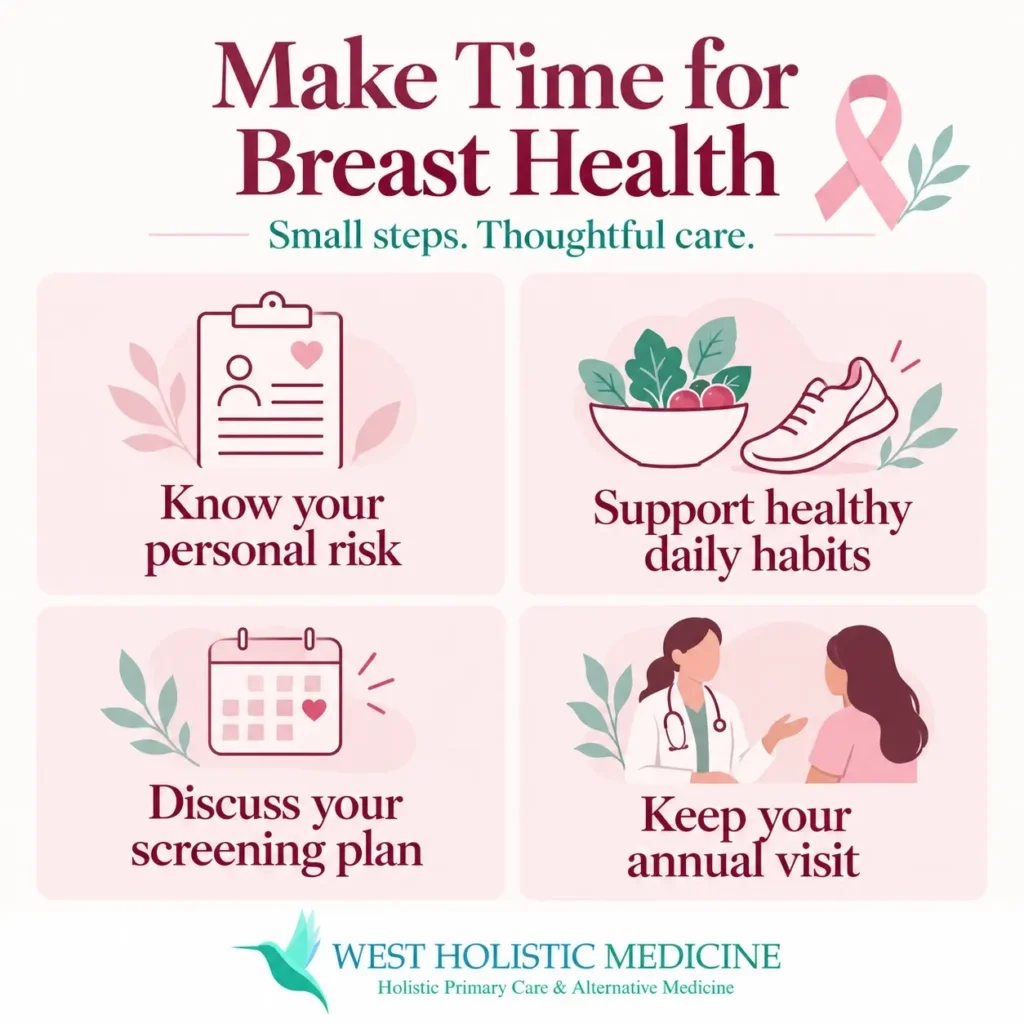
Why your annual visit and screening matter
Feeling well is a good time to plan ahead. Your annual preventive visit is a chance to review family history, breast density, and hormone use, and discuss whether genetic counseling or a different screening plan makes sense for you.
For average-risk women, the U.S. Preventive Services Task Force recommends mammograms every two years from ages 40 to 74. At West Holistic Medicine, we take an individualized approach and may recommend starting screening earlier based on your family history, personal risk factors, and clinical assessment.
Your annual visit helps keep that plan on track, but it does not replace your mammogram. Screening helps detect cancer earlier; it does not prevent cancer from forming.
Notice a new lump, skin dimpling, nipple discharge, or another breast change? Contact your doctor promptly instead of waiting for your annual visit.
At West Holistic Medicine, we take time to connect your medical history, everyday habits, and preventive care.
Disclaimer: This post is intended for educational purposes only and is not a substitute for professional medical advice. Please consult your healthcare practitioner regarding your individual health needs.
Sources:
National Cancer Institute: Breast cancer causes and risk factors
https://www.cancer.gov/types/breast/causes-risk-factors
National Cancer Institute: Breast cancer prevention and risk reduction
https://www.cancer.gov/types/breast/causes-risk-factors/prevention
American Cancer Society: Nutrition and physical activity guidelines for cancer prevention
https://www.cancer.org/cancer/risk-prevention/diet-physical-activity/acs-guidelines-nutrition-physical-activity-cancer-prevention.html
The Menopause Society: Hormone therapy benefits, risks, and individualized care
https://menopause.org/patient-education/menopause-topics/hormone-therapy
National Cancer Institute: Menopausal hormone therapy and cancer
https://www.cancer.gov/about-cancer/causes-prevention/risk/hormones/mht-fact-sheet
U.S. Preventive Services Task Force, 2024: Breast cancer screening recommendations
https://www.uspreventiveservicestaskforce.org/uspstf/document/ClinicalSummaryFinal/breast-cancer-screening
National Cancer Institute: Breast cancer signs and symptoms
https://www.cancer.gov/types/breast/symptoms
Share this article