Is Alcohol Good for You? The Truth Behind the Red Wine Myth
For years, many people were told a glass of wine was “good for the heart.”
But newer research — and what we’re seeing clinically — tells a different story.
At West Holistic Medicine, we’re seeing more patients where alcohol may be quietly affecting:
• sleep
• energy
• blood sugar
• inflammation
• emotional health
Not always obvious — but often enough to matter.
Where the “Healthy Alcohol” Idea Came From
Some older studies suggested people who drank small amounts of wine had better heart health.
But those studies didn’t prove alcohol was the reason.
Lifestyle factors — like diet, stress, and movement — likely played a role.
Today, major health organizations do not recommend drinking alcohol for health benefits.
Is Any Amount of Alcohol Safe?
This is where guidance has shifted. Current research suggests:
• Alcohol carries health risks, even at lower amounts
• Risk increases with intake
• It is not necessary for any health benefit
That doesn’t mean you “can’t” drink.
It means alcohol isn’t a health tool — and it doesn’t need to be.
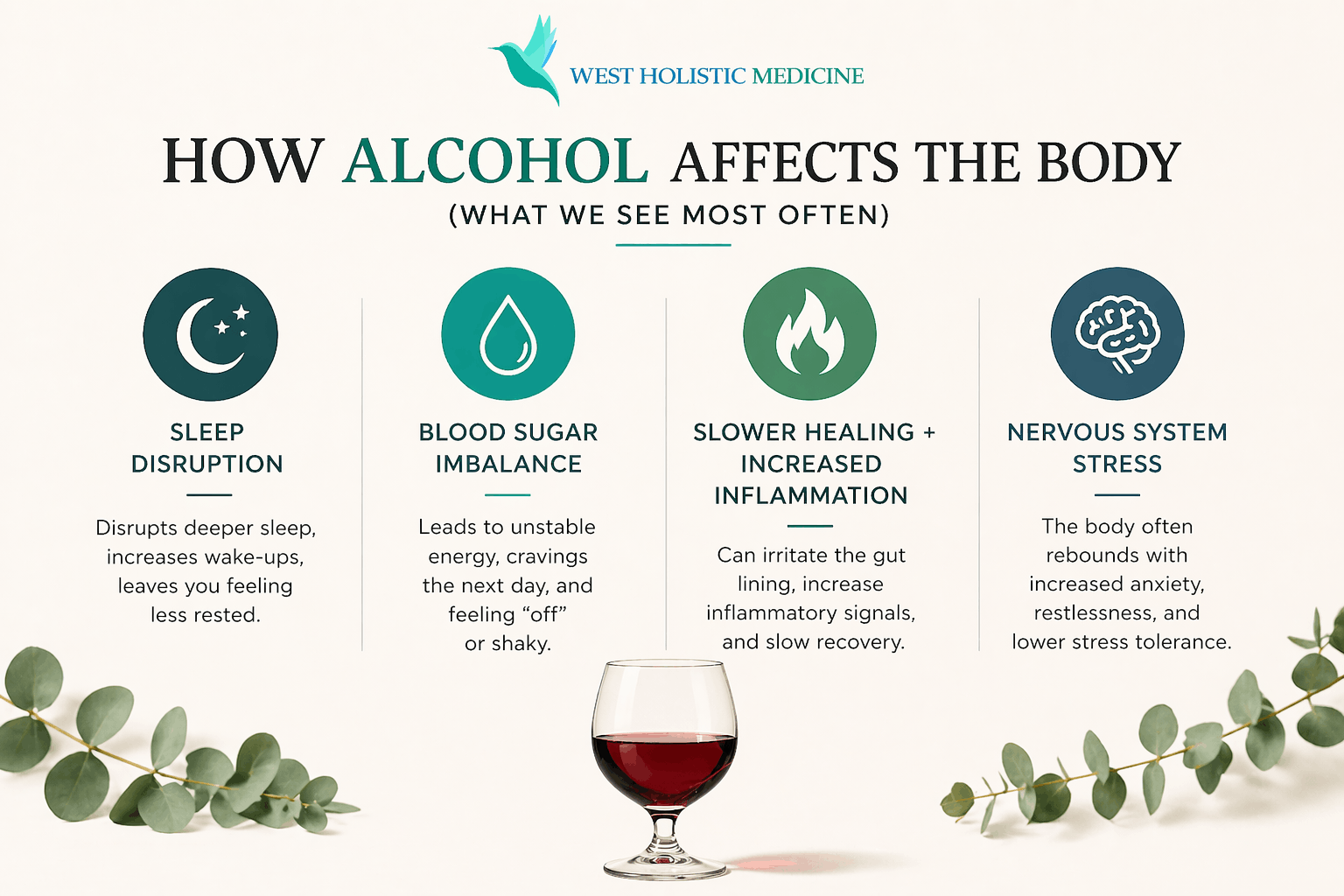
How Alcohol Affects the Body (What We See Most Often)
Sleep Disruption
Alcohol may help you fall asleep faster.
But later in the night, it often:
• disrupts deeper sleep
• increases wake-ups
• leaves you feeling less rested
This is why many people wake up around 2–4 AM after drinking.
Blood Sugar Imbalance
Alcohol affects the liver — which plays a key role in blood sugar balance.
This can lead to:
• unstable energy
• cravings the next day
• feeling “off” or shaky
We see this especially in patients working on metabolic health.
Slower Healing + Increased Inflammation
Alcohol can:
• irritate the gut lining
• increase inflammatory signals
• slow recovery
Especially for patients dealing with:
• autoimmune symptoms
• histamine overload
• gut issues
• fatigue
Nervous System Stress
Alcohol can feel calming in the moment.
But afterward, the body often rebounds with:
• increased anxiety
• restlessness
• lower stress tolerance
Many patients notice this the next day — even after “just one or two drinks.”
What About Red Wine?
Red wine contains antioxidants like resveratrol.
But the amount is small.
You would need large amounts of wine to get a meaningful benefit —
which would outweigh any positives.
So while it’s often marketed as “healthier,”
it’s not a reliable health claim.
A More Supportive Way to Think About Alcohol
Instead of asking: “Is this allowed?”
Try asking:
• How do I feel the next day?
• How is my sleep?
• Is this supporting my energy and health goals?
• Am I craving something else instead?
This helps shift from restriction → awareness.
Signs Alcohol May Be Affecting You
You might consider reducing or re-evaluating intake if you notice:
• waking during the night
• increased anxiety
• sugar cravings
• fatigue the next day
• slower progress with weight or inflammation
• flushing, redness, or hives
These patterns are common — and often overlooked.
Simple Alternatives That Still Feel Good
You don’t have to give up the ritual.
Try:
• sparkling water with lime + minerals
• herbal iced teas
• alcohol-free mocktails
• low-sugar functional beverages
• adaptogenic blends (like ashwagandha, reishi, or tulsi)
Small swaps can make a big difference in how you feel.
Ready to Feel Better Day-to-Day?
If you’re noticing patterns like poor sleep, energy dips, or increased cravings, it may be time to take a closer look at what’s influencing your system — including alcohol.
We’re here to help you connect the dots and build a plan that actually works for your life.

Share this article