
904 West Avenue # 109, Austin TX 78701
512-814-0148

How to Calm Your Nervous System Naturally — An Integrative Medicine Approach

Natural and holistic stress relief

April is Stress Awareness Month — and if you’ve been feeling stretched thin, wired but tired, or running on fumes, you’re not alone. Chronic stress is one of the most common things we see at West Holistic Medicine, and it rarely looks like just “feeling stressed.” It shows up as gut issues, hormone imbalances, poor sleep, skin flares, and an immune system that can’t keep up.

In this blog, we’ll walk through a few simple ways to support your nervous system—along with a short guided EFT tapping practice you can try for yourself.

And if you want even more ideas from our care team, don’t miss: 15 Ways Our Integrative Healers Beat Stress

Why Stress Is a Body Problem, Not Just a Mind Problem

When your brain perceives a threat — a deadline, a hard conversation, a packed schedule — it activates your sympathetic nervous system. Cortisol and adrenaline flood your body. Your heart rate rises, digestion slows, muscles tighten. This response was designed to be temporary.

The problem is modern life keeps it switched on. Over time, chronic activation leads to inflammation, hormonal dysregulation, immune suppression, and burnout. As Dr. Maltz often says: you can’t think your way out of a nervous system stuck in survival mode. You have to work with the body directly.

Is Your "Normal" Actually a Stress Response?

This is where it gets important — and often surprising. Many of us have been dysregulated for so long that it just feels like who we are. You might think you’re “just an anxious person,” “always tired,” or “someone who shuts down under pressure.” But these are often nervous system patterns, not personality traits.

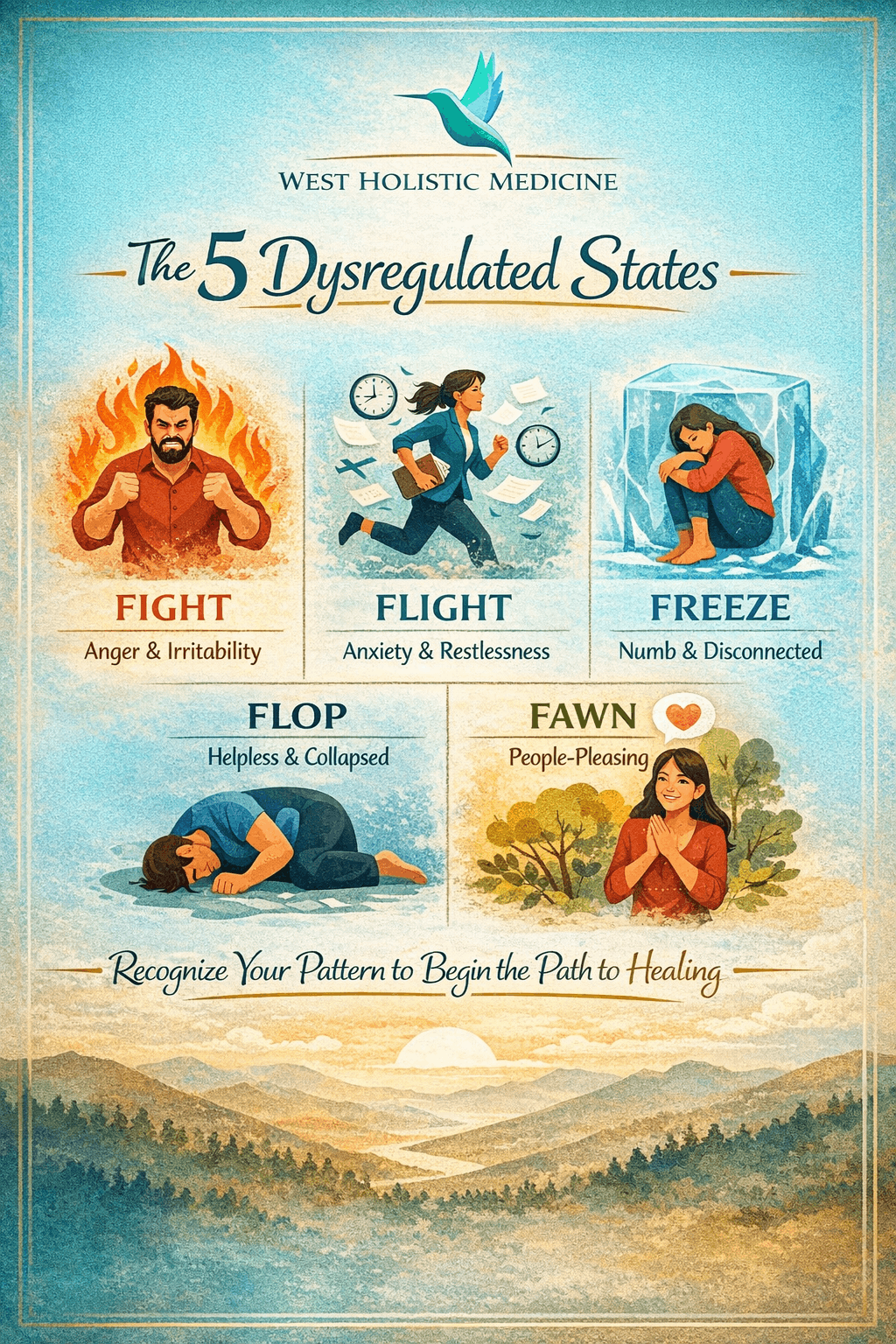
Most people know fight-or-flight, but there are actually five dysregulated states:

⚡ Fight — Irritability, anger that flares easily, needing to control situations, feeling chronically on edge. The nervous system is braced for conflict even when there isn’t one.

🏃 Flight — Constant busyness, overthinking, restlessness, anxiety, difficulty sitting still. You’re always moving, always planning — often running from something you can’t name.

🧊 Freeze — Brain fog, numbness, disconnection, low motivation, shutting down when things get hard. Often misread as laziness or depression, but it’s a protective response.

😶 Flop — A deeper collapse response. Feeling helpless, limp, or unable to act or speak. Common in people who have experienced trauma where neither fighting nor fleeing felt possible.

🤝 Fawn — People-pleasing, over-apologizing, difficulty saying no, shrinking yourself to keep the peace. Fawn keeps you “safe” by making you agreeable — but disconnects you from your own needs over time.

Recognizing your pattern is the first step. The second is building the nervous system resilience to move out of it.

Vagal Tone: The Missing Piece

At the center of all five stress responses is one key player: the vagus nerve — the longest cranial nerve in the body, running from your brainstem through your heart, lungs, and gut. It’s the primary highway of your parasympathetic nervous system, your body’s “rest and digest” mode.

Vagal tone is essentially the fitness level of your vagus nerve. High vagal tone means your nervous system is flexible — you can get activated when needed and return to calm quickly. Low vagal tone means you get stuck. You stay in fight, flight, freeze, flop, or fawn long after the stressor is gone — or you cycle between them in ways that feel out of your control.

Signs of low vagal tone include slow recovery from stress, poor heart rate variability (HRV), digestive issues, inflammation, and difficulty feeling safe even in genuinely safe situations.

The good news: vagal tone can be improved. Consistently. With the right practices.


Dr. Maltz's Favorite Device for Vagus Nerve Support: Pulsetto

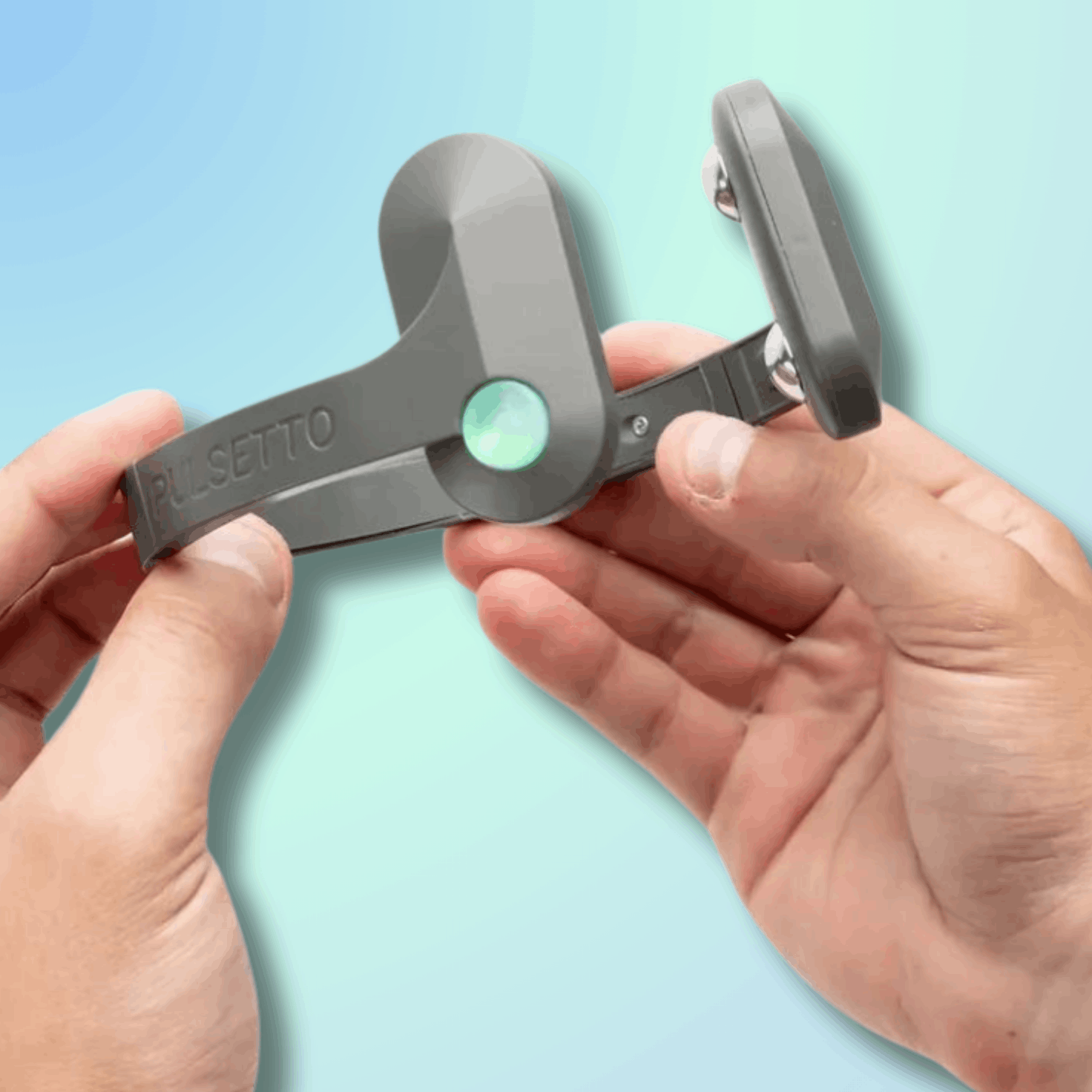
Breathwork, humming, gargling, and singing all stimulate the vagus nerve naturally. But for patients who need a more direct, consistent approach — especially those deep in burnout or with chronically low HRV — Dr. Maltz recommends the Pulsetto vagus nerve stimulator.

Pulsetto is a small wearable device that sits around your neck and delivers gentle electrical pulses directly over the vagus nerve. Sessions are just 4–6 minutes. A 2025 peer-reviewed study found it may increase alpha-wave brain activity (associated with calm) and lower blood pressure. The companion app offers programs for stress, sleep, burnout, and pain relief.

What patients notice most: feeling calmer after each session, falling asleep faster, and improved HRV scores over time — a key marker of nervous system resilience.

It’s non-invasive, drug-free, and designed for daily home use. For patients who struggle to meditate or need something they can use during a busy day, the Pulsetto is a great option!

👉 Shop Pulsetto via West Holistic Medicine

This is an affiliate link — we only recommend products our practitioners genuinely use and believe in.

Other Ways to Support Your Nervous System Daily

Small, consistent inputs add up. A few things we love:

  • Breathwork — 5 minutes of box breathing or 4-7-8 breathing can shift your state quickly
  • Magnesium glycinate — one of the most common deficiencies in stressed adults; ask your doctor if it’s right for you
  • Acupuncture — deeply regulating for the nervous system; if you haven’t tried it for stress, Danielle, L.Ac. would love to support you
  • Walking in nature — activates the vagus nerve naturally and lowers cortisol
  • Sleep — the foundation of everything; stress and poor sleep are a vicious cycle

For more nervous system regulation tips, check out 15 Ways Our Integrative Healers Beat Stress


Try This: A 5-Minute EFT Tapping Script for Stress Relief


Emotional Freedom Technique (EFT), commonly called “tapping,” is one of the most accessible and well-researched mind-body tools available. It combines elements of cognitive therapy with acupressure — you tap on specific meridian points on the face and body while speaking to your current emotional state.

Research has shown EFT can meaningfully reduce cortisol levels, ease anxiety, and help the nervous system shift out of fight-or-flight. The best part: you can do it anywhere, in just a few minutes, with nothing but your fingertips.

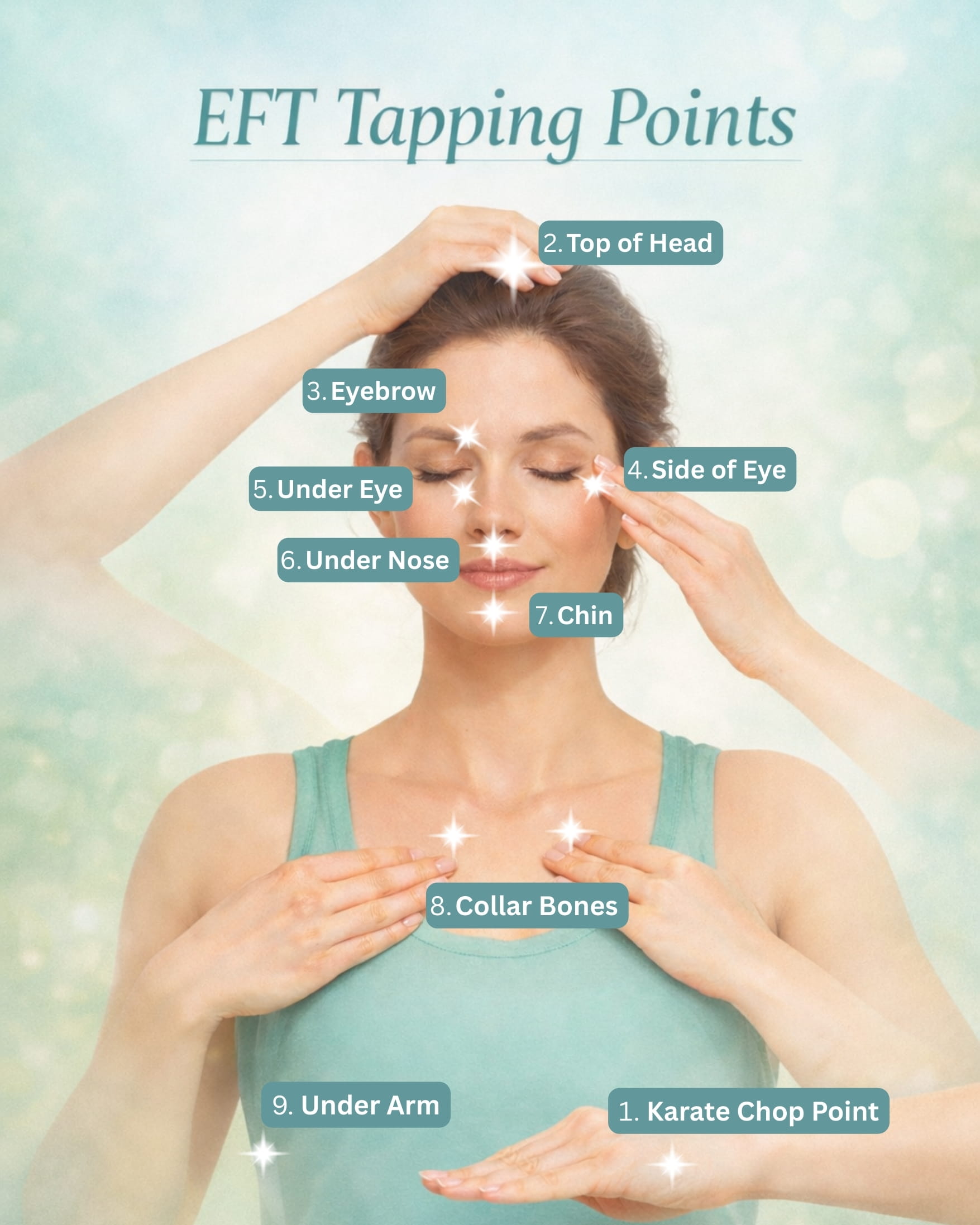
eft tapping points

EFT Tapping Script: Releasing Stress & Coming Home to Yourself

How to use this: Tap firmly but gently on each point — about 7 taps per point — as you say the phrases out loud (or whisper them). Take a deep belly breath between rounds.

🌀 Round 1 — Acknowledge Where You Are

Start on the Karate Chop point. Repeat this setup statement 3 times:

“Even though I feel stressed and overwhelmed right now, I deeply and completely accept myself.”

Now move through the points, saying each phrase as you tap. Feel free to use the phrases below or adjust them to what resonates most with you:

Top of Head: “There’s so much on my plate right now.”
Eyebrow: “I feel the tension in my body.”
Side of Eye: “My mind won’t stop spinning.”
Under Eye: “I’m carrying a lot.”
Under Nose: “I don’t know how to slow down.”
Chin: “It feels like I’m always behind.”
Collarbone: “My nervous system is exhausted.”
Under Arm: “And I’m acknowledging that right now.”

Take a breath.


🌿 Round 2 — Create Space for Calm

Return to the Karate Chop point:

“Even though I’ve been running on stress, I’m open to letting my body find calm.”

Move through the points:

Top of Head: “I’m choosing to come back to myself.”
Eyebrow: “What if I could slow down, even a little?”
Side of Eye: “My nervous system knows how to rest.”
Under Eye: “I give my body permission to exhale.”
Under Nose: “I don’t have to solve everything right now.”
Chin: “I can take this one breath at a time.”
Collarbone: “Safety lives in my body, not just in my circumstances.”
Under Arm: “I’m releasing what I don’t need to carry.”

Take a breath.


☀️ Round 3 — Settle Into the Present

Return to the Karate Chop point:

“I am here. I am safe. My body is capable of finding balance.”

Move through the points:

Top of Head: “I am coming home to myself.”
Eyebrow: “I feel my feet on the ground.”
Side of Eye: “I feel the air moving through me.”
Under Eye: “My shoulders can soften.”
Under Nose: “My jaw can unclench.”
Chin: “There is enough time. I am enough.”
Collarbone: “I am more than my to-do list.”
Under Arm: “I am grounded, present, and at peace.”

Take one long, slow breath. Notice how you feel.

Take a moment after tapping to check in. Does your chest feel lighter? Is the tension in your shoulders a little softer? Even a small shift matters — that’s your parasympathetic nervous system waking up.

🌿 Looking for More Personalized EFT Support?

If this practice resonated with you, working one-on-one can help you go even deeper.

Darby Carter, our health coach and EFT tapping practitioner, offers personalized sessions designed to help regulate your nervous system and address your unique stress patterns. Together, you’ll create customized tapping scripts tailored specifically to what your body is holding.

Ready to Go Deeper?

Stress isn’t something you have to white-knuckle through alone. At West Holistic Medicine, we look at hormones, gut health, sleep, and your nervous system together — to understand why your body is struggling and build a plan that actually works.

👉 Register or sign in online to book
📞 Or call 512-814-0148

Leave a Comment

Your email address will not be published. Required fields are marked *

Share this article

Sign up to our newsletter