
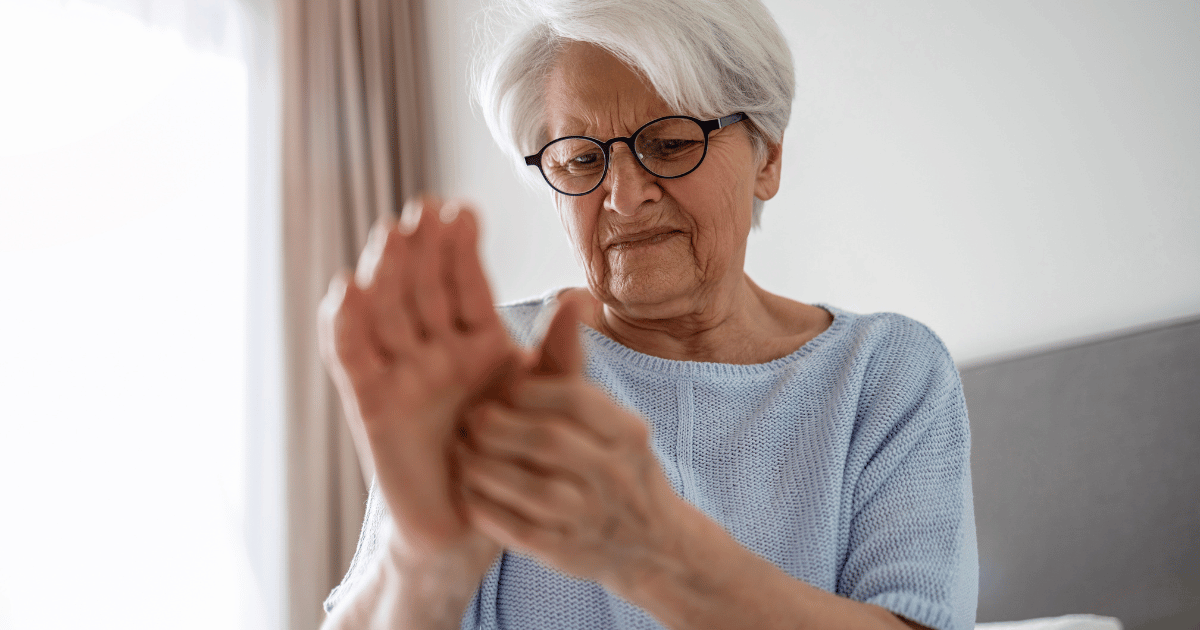
"I'm just getting older."
It's one of the most common things people say when a knee starts complaining on the stairs, or a shoulder won't reach the top shelf anymore, or mornings take a lot longer to loosen up than they used to. Usually it's said with a shrug, right before changing the subject.
Sometimes it's true. Bodies do change. But "getting older" has turned into a catch-all explanation, and it can quietly talk people out of asking a reasonable question: why does this hurt, and why now?
Some Things Really Do Change With Age
Cartilage thins a little. Tendons lose some elasticity. Muscle mass drops off when it isn't being used. Recovery from a long hike or a weekend of yard work takes longer at 55 than it did at 25.
That's all normal, and none of it means something is wrong.
A stiff morning after sleeping funny, soreness two days after trying a new workout, a knee that grumbles during a cold front: that's mostly just the background noise of having a body that's been used.
Where the "Just Aging" Explanation Falls Apart
Aging is slow and fairly even. Pain worth a closer look often behaves differently.
It shows up on one side and not the other. It gets worse over weeks or months instead of holding steady. It wakes people at 3 a.m. It shrinks the list of things they're willing to do.
Age by itself doesn't usually explain a hip that hurts so much you've stopped walking the greenbelt, or a hand that keeps going numb, or back pain that's been hanging around since March without budging.
None of that is cause for alarm. It's just cause for curiosity.
Pain Is Rarely a One-Ingredient Recipe
Part of what makes chronic pain so frustrating is that two people can describe the exact same symptom and have completely different things going on underneath it.
Possible contributors include:
- Inflammation
- Nerve-related pain
- Joint or arthritic changes
- Muscle weakness or loss of strength
- Old injuries that changed how you move
- Movement patterns and postural habits
- Chronic muscle tension tied to stress
- Medications and other lifestyle factors
- Poor or interrupted sleep
- Other medical conditions, sometimes ones with no obvious connection to the painful area
Often it's several of these at once. A sore knee might involve some arthritic change, plus weak glutes, plus six months of skipped walks because walking hurts. Sorting out which piece is driving which actually matters, because a plan for deconditioning looks nothing like a plan for nerve pain.
It's also why blanket advice helps some people enormously and does nothing at all for the person sitting next to them.
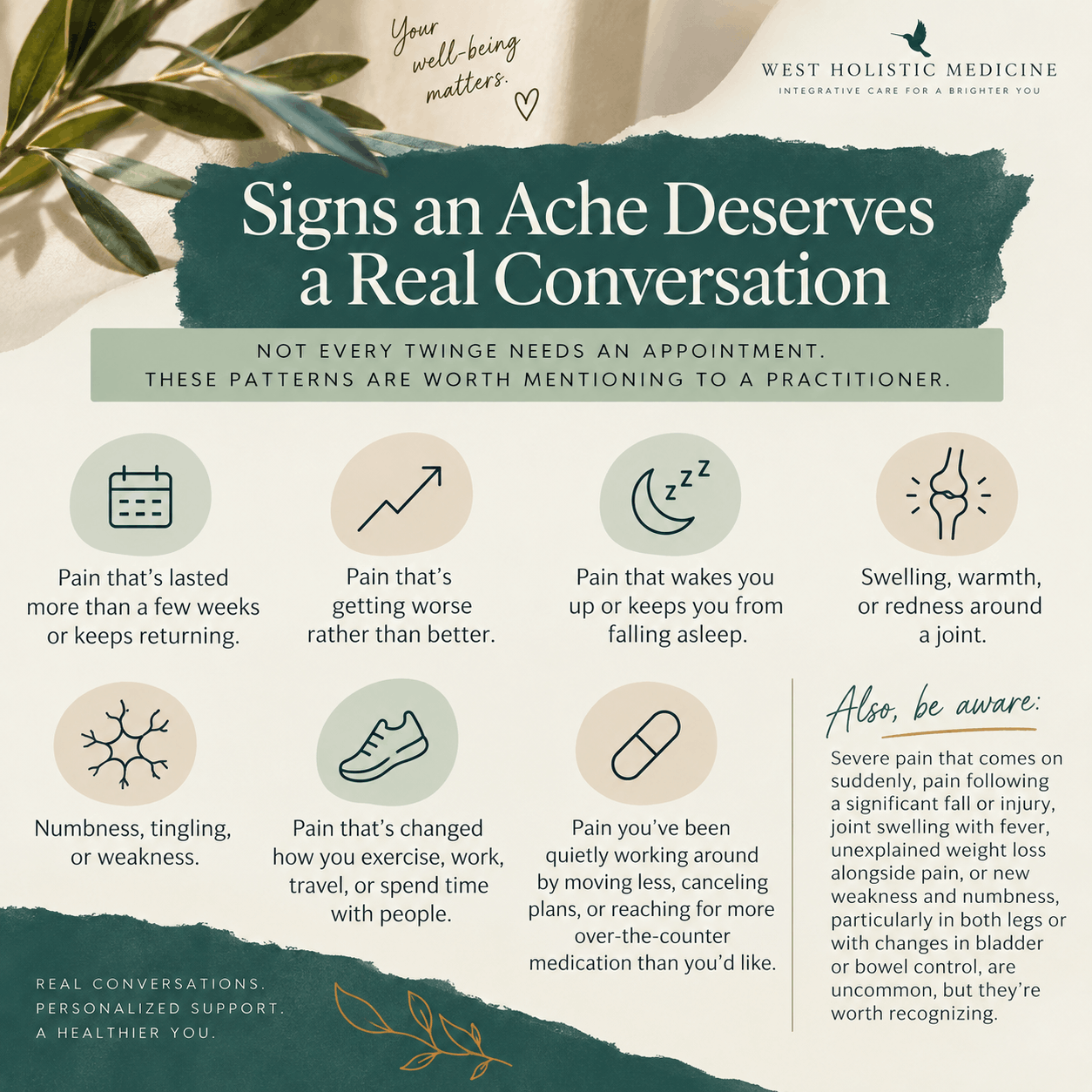
A smaller set of things deserves prompt attention rather than a wait-and-see approach: pain following a significant fall or injury, severe pain that comes on suddenly, joint swelling with fever, unexplained weight loss alongside pain, or new weakness and numbness, particularly in both legs or with changes in bladder or bowel control. These are uncommon, but they're worth recognizing.
There's More Than One Door Into Pain Care
Pain is one of the areas where having several tools available genuinely helps, because the right starting point depends on the person in the room.
At West Holistic Medicine, that can look like a few different things.
Integrative medical care with Dr. Ashley Maltz or Dr. Julia Afridi can help evaluate symptoms alongside health history, medications, physical findings, labs when appropriate, and other factors that may be contributing or simply haven’t been explored yet.
Osteopathic manipulative treatment (OMT) is also available through Dr. Afridi. It's a hands-on approach that works with the joints, muscles, and connective tissue, and for some people it's a useful part of addressing stiffness, restricted movement, or pain that seems tied to how the body is moving.
Acupuncture with Danielle Bower, L.Ac. offers another approach to pain relief. Acupuncture may help reduce certain types of pain and muscle tension while supporting mobility and function. Whether you're dealing with an aching back, tight neck, joint discomfort, or another musculoskeletal concern, treatment is personalized to you and what you're experiencing.
Health coaching is where the practical side lives. Movement you'll actually do, sleep, nutrition, and the unsexy work of staying consistent for months instead of white-knuckling a plan for nine days.
EFT Tapping is a mind-body technique for stress and emotional regulation. It isn't a treatment for an underlying condition, but stress and pain tend to feed each other, and having a way to turn down the volume on stress helps a lot of people function better.
For patients interested in another whole person perspective, Ayurvedic support can offer individualized guidance around lifestyle, daily routines, nutrition, and overall balance.
Nobody needs all of it. The point is that the plan gets built around the person rather than the other way around.
Disclaimer: This post is intended for educational purposes only and is not a substitute for professional medical advice. Please consult your healthcare practitioner regarding your individual health needs.
Share this article